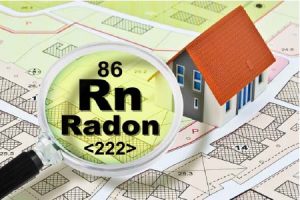
 January is National Radon Action month, and many people don’t realize that radon is the second leading cause of lung disease, right behind smoking/vaping. The Environmental Protection Agency, the American Lung Association, and the Center for Disease Control and Prevention all have information on their websites about radon, its effects, and how to stay safe.
Radon is a gas that occurs naturally underneath the ground, and it can permeate homes and buildings through the floor, affecting the indoor air quality. It is considered an environmental factor.
Testing for Radon
Ideally, before you move into a home, you should test for radon. Radon can vary from house to house; it may be low in one house, but high at the house next door. The only way to know if your home or office/workplace has radon is to test for it. There are do-it-yourself radon test kits for around $30 that include the lab testing cost. There are also continual monitoring detectors for around $150.
Radon Mitigation Systems
If your radon tests come back high, a radon reduction system can be installed. In a typical system, radon gas is redirected from the lowest level of your home through a PVC pipe to the roof of your house. The system draws the low-lying air from a hole or sump pump in the lowest level floor and directs it out of the house with a fan.
If you have never tested for radon, there is no time like the present. Get a test kit now and protect you and your family’s health! It is worth the small investment to make your home or workplace healthy and safe.
TAKE ACTION…KNOW YOUR LEVEL!
Download flyer: STOTW_1303_National_Radon_Action_Month

Download Spanish flyer: STOTW_1303_National_Radon_Action_Month_esp